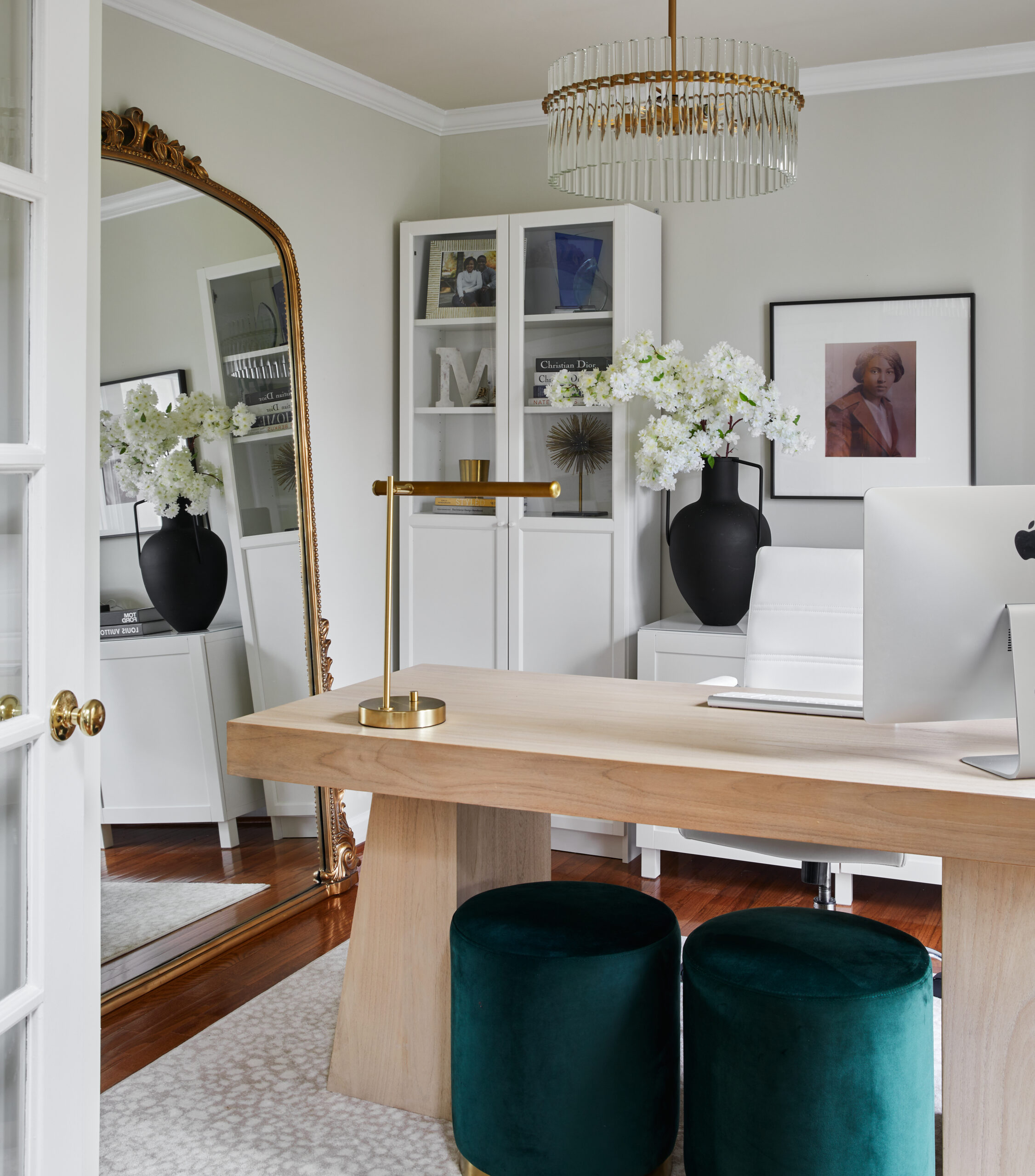
Your home should do more than look beautiful — it should make you feel good. As a Washington, DC interior designer, I work with homeowners every day who are investing not just in aesthetics, but in spaces that genuinely support their mental and physical wellbeing. Whether you live in a Capitol Hill rowhouse, a Bethesda colonial, or a modern condo in Arlington, your environment has a profound effect on your mood, energy, sleep, and stress levels.
Wellness interior design isn’t a trend — it’s a philosophy. And the good news is that small, intentional changes to your home can make a difference. Here are six ways to transform your DC home into a sanctuary that supports your health and happiness.
1. Layer Your Lighting Intentionally
Lighting is one of the most powerful — and most underestimated — tools in wellness home design. The quality and intensity of light directly influences your circadian rhythm, energy levels, and even your cortisol production. A well-lit home isn’t just one with bright overhead fixtures; it’s a home with layered lighting that evolves throughout the day.
Think of it this way: start your morning with soft, warm light from a bedside table lamp or a dimmable floor lamp. This gentle glow eases your body into wakefulness without the shock of overhead fluorescents. After your shower, when you’re ready to take on the day, switch on your bright ceiling lights to signal to your brain that it’s time to focus.
In the evening, transition back to warm, low lighting to prepare your body for rest. Smart bulbs and dimmer switches make this effortless, and they’re a worthwhile investment for any DC homeowner looking to improve sleep quality and overall wellbeing.

2. Use Scent as a Daily Ritual
Scent is the fastest pathway to the emotional brain, which means it’s one of the most effective tools for shifting your mood and mindset. A wellness-forward home uses scent with purpose — not just to smell good, but to support different mental states throughout the day.
One of my favorite strategies for DC clients is placing an essential oil diffuser on a timer. Set it to run in the morning with uplifting scents like citrus, eucalyptus, or peppermint so you wake up to a fresh, energizing atmosphere. Then program an evening blend — think lavender, sandalwood, or cedarwood — to greet you when you come home from a long commute, signaling to your nervous system that it’s time to decompress.
In a city as fast-paced as Washington, DC, coming home to a scent you love can be transformative. It’s a small detail that makes a big impact on your daily wellness routine.
3. Design Your Home’s Soundscape
Sound shapes your experience of a space just as much as color or furniture. Noise pollution is a real challenge for DC residents — whether you’re dealing with traffic on Connecticut Avenue or a busy neighborhood street. The solution isn’t just to block out unwanted noise, but to intentionally design what you hear inside your home.
Start with your alarm clock. Swapping a jarring buzz for a gradual, nature-based sound — like ocean waves, birdsong, or rainfall — is one of the simplest wellness upgrades you can make. It sets a calm, grounded tone for the entire day.
Consider adding a small Bluetooth speaker in key rooms to play ambient or classical music throughout your day. Research consistently shows that calming background music reduces stress hormones and can even boost focus and productivity. For homeowners who work remotely — a growing number of our DC clients — this is especially impactful in a home office setting.
4. Organize and Purge: Clear Space, Clear Mind
Visual clutter is mental clutter. This is one of the foundational principles of wellness-focused interior design, and it holds true no matter the size of your home. In a city where many people are living in condos, townhouses, or apartments where square footage is at a premium, thoughtful organization isn’t just aesthetically pleasing — it’s essential for peace of mind.
A good declutter starts with an honest inventory: what do you actually use, love, and need? Everything else is noise. Donate, sell, or let go of items that no longer serve you. Then invest in smart storage solutions that keep your remaining belongings organized and out of sight — think built-in shelving, stylish baskets, and furniture with hidden storage.
Our DC interior design clients consistently report feeling calmer, more productive, and less anxious in their homes after a thorough organization refresh. When your environment is ordered, your mind follows. This is especially true in shared living spaces or open floor plans where the eye has nowhere to rest if surfaces are cluttered.

5. Create Zones for Your Rituals
One of the most impactful concepts in wellness interior design is the idea of “zones” — dedicated spaces in your home that support specific daily rituals. When your environment is set up to make healthy habits easier, you’re far more likely to stick with them.
A morning coffee station is a perfect example. Designate a corner of your kitchen with your favorite mug displayed, a quality coffee maker, and perhaps a small tray with your creamers and sweeteners. This tiny ritual space transforms your morning routine into something you actually look forward to.
A reading nook is another wellness zone our clients love — ideally positioned near a window that gets great natural light. Add a cozy chair, a small side table, a lamp for evening reading, and a soft throw blanket, and you’ve created a dedicated retreat within your own home. In a busy, high-pressure city like Washington, DC, having a clear space that signals “this is where I unwind” can be genuinely restorative.
Other wellness zones to consider: a yoga or meditation corner with a rolled mat and a candle, a journaling desk by a window, or even a well-organized entryway that allows you to truly leave the workday behind when you walk through the door.
6. Choose Textures That Feel as Good as They Look
Wellness design engages all five senses, and touch is no exception. The textures you choose for your home have a direct impact on how comfortable, cared-for, and at ease you feel in your space. This is especially true in the bedroom and bathroom — rooms associated with rest, self-care, and recovery.
Invest in a plush bath mat that feels genuinely luxurious underfoot. Choose a bathrobe in a fabric that you actually want to wrap yourself in — whether that’s a waffle-knit cotton, a Turkish terry, or a cashmere-blend for ultimate indulgence. These aren’t frivolous purchases; they’re part of creating a home environment that actively supports your sense of wellbeing.
Beyond the bathroom, consider layering textures throughout your home: linen throw pillows, chunky knit blankets, a jute area rug beneath your sofa. Natural materials tend to feel grounding and tactilely satisfying in a way that synthetic fabrics don’t, and they bring a warmth to interiors that photographs beautifully — always a bonus when you’re entertaining DC friends and colleagues.
Ready to Design a Home That Works for Your Wellness?
At Morrow Design Studios, we specialize in creating beautiful, intentional interiors for homeowners across the Washington, DC metropolitan area — including Georgetown, Chevy Chase, Alexandria, McLean, and Bethesda. If you’re ready to design a home that genuinely supports your lifestyle and wellbeing, we’d love to connect.